You do not need a studio or an hour of free time to start yoga at home. You need a bit of floor, something soft to sit on and a plan short enough that you will actually follow it. This article covers where to practise, the few things worth keeping nearby, a first fifteen-minute sequence you can try today and how to keep going on the days when your energy is low. It ends with the signs that tell you to stop.
Choose a spot you will come back to
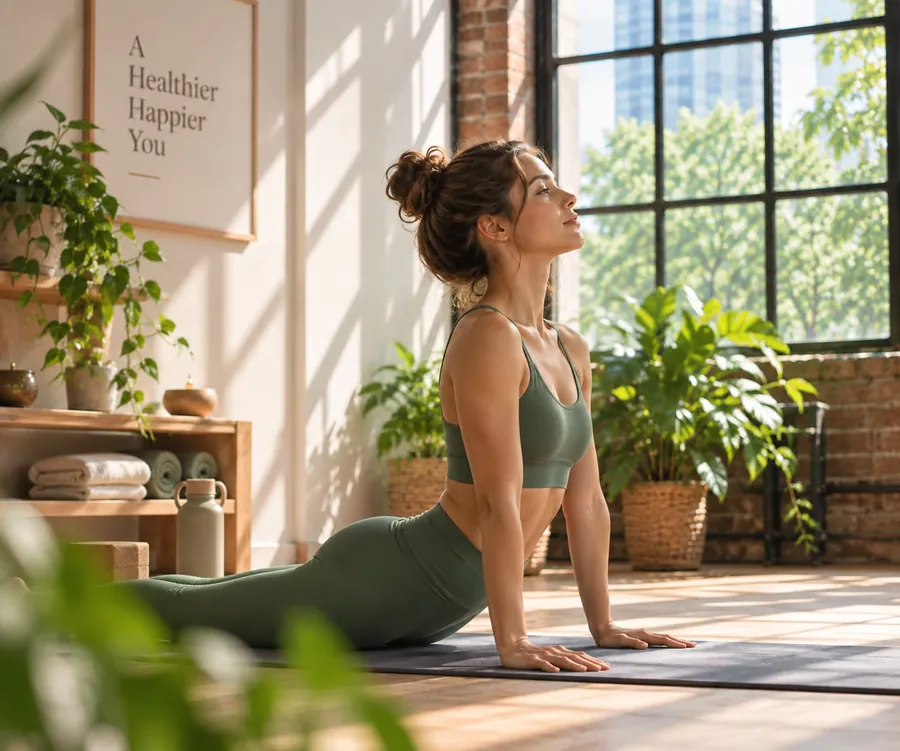
Pick one place and keep using it: a strip of floor beside the bed, or the space between the sofa and the window. It should be big enough to lie down with your arms stretched out to the sides, and clear enough that you are not moving a laundry basket every time. When the spot stays the same, starting is easier, because you are not deciding where to go each day.
Look at the floor before anything else. Wood, tiles or a low carpet all work. Avoid a thick rug that shifts under your feet, since standing poses need a stable base. If the room is cold, close the window and keep your socks on for the first few minutes, then take them off before you stand.
What you need, and what you can skip
Most of what helps is already in your home. You do not need blocks, straps or special clothes to begin. Wear something you can bend in, and leave your phone on silent, face down and out of reach.
Keep your few things together in a basket or on a shelf near your spot. When the mat is already within reach, the gap between thinking about practising and doing it gets much shorter. This is all you need to start:
- A mat, or a rug or folded blanket that does not slide, for grip and a little padding.
- A firm cushion or a folded towel to sit on, so your hips are slightly higher than your knees.
- A blanket to put under your knees when kneeling and to cover yourself while you rest at the end.
- A clear stretch of wall, for balance in standing poses and for resting your legs at the end.
Fifteen minutes is enough
A short practice you repeat is worth more than a long one you keep putting off. Fifteen minutes is enough to move your spine, stretch your legs, notice your breath and rest. Some days you will want to stay longer, and that is fine, but the plan stays at fifteen.
Here is a first sequence. Move slowly, breathe through your nose if that is comfortable and never hold your breath. A mild stretch is fine. Anything sharp, pinching or inside a joint means ease off or come out of the pose.
- Sit on your cushion for 2 minutes and notice your breath coming in and going out.
- Come onto hands and knees and move between cat and cow, rounding and then gently arching your back, for 8 slow breaths. Put the blanket under your knees if they feel sore.
- Rest in child's pose, knees wide, forehead on the floor or on your stacked hands, for 5 breaths.
- Stand in mountain pose, feet hip-width apart, for 5 breaths. Then raise your arms as you breathe in and lower them as you breathe out, 5 times.
- Fold forward from standing with your knees soft and your head heavy for 5 breaths, then roll up slowly.
- Lie on your back, hug your knees in, then let them drop to one side and then the other for a gentle twist, 5 breaths each side.
- Finish lying flat with the blanket over you for 3 to 5 minutes, letting the floor take your weight.
How often, and what to do on low-energy days
Three times a week is a good start. Choose the days now and tie each session to something you already do, such as after your morning coffee or before dinner. After a few weeks, if you want more, add a fourth day or let one session run a little longer.
Some days you will not feel like it. On those days, keep the appointment but make it smaller. Sit for two minutes, do a few rounds of cat and cow, then lie down with your legs resting on the seat of a chair or up the wall. Five minutes still counts, and it keeps the habit going for next time. If you are ill or have a fever, skip it and rest.
Signs to stop, and when to ask a doctor first
Practising at home should feel steady, not like a test. Stop and rest if you feel sharp, shooting or burning pain, pain in a joint, dizziness, chest discomfort, unusual breathlessness, or numbness and tingling. Sit or lie down, breathe normally and do not carry on that day. If the feeling does not settle, see a doctor.
Talk to your doctor or physiotherapist before you start if you have had recent surgery or an injury, have heart or blood pressure problems, osteoporosis or a joint replacement, or are being treated for any condition. If you are pregnant or have recently given birth, ask your midwife or doctor first and choose a class made for pregnancy or for after the birth.
Takeaway. Pick one spot, keep your things close and practise for fifteen minutes three times a week, making the session smaller rather than skipping it on tired days. If you would like a fuller guide, our Yoga & Meditation class builds on this with alignment basics and a slow sun salutation.
This article is general wellbeing education, not medical advice. Read the health disclaimer.